Heart-Healthy Eating
Eat plants, whole grains, fish, and nuts. Limit added sugar, salt, and processed meat.
Heart-Healthy Eating is the foundation everyone benefits from — kids, adults, and anyone who wants to keep their heart in good shape for the long haul. It's based on the Mediterranean-style pattern that decades of research show works.
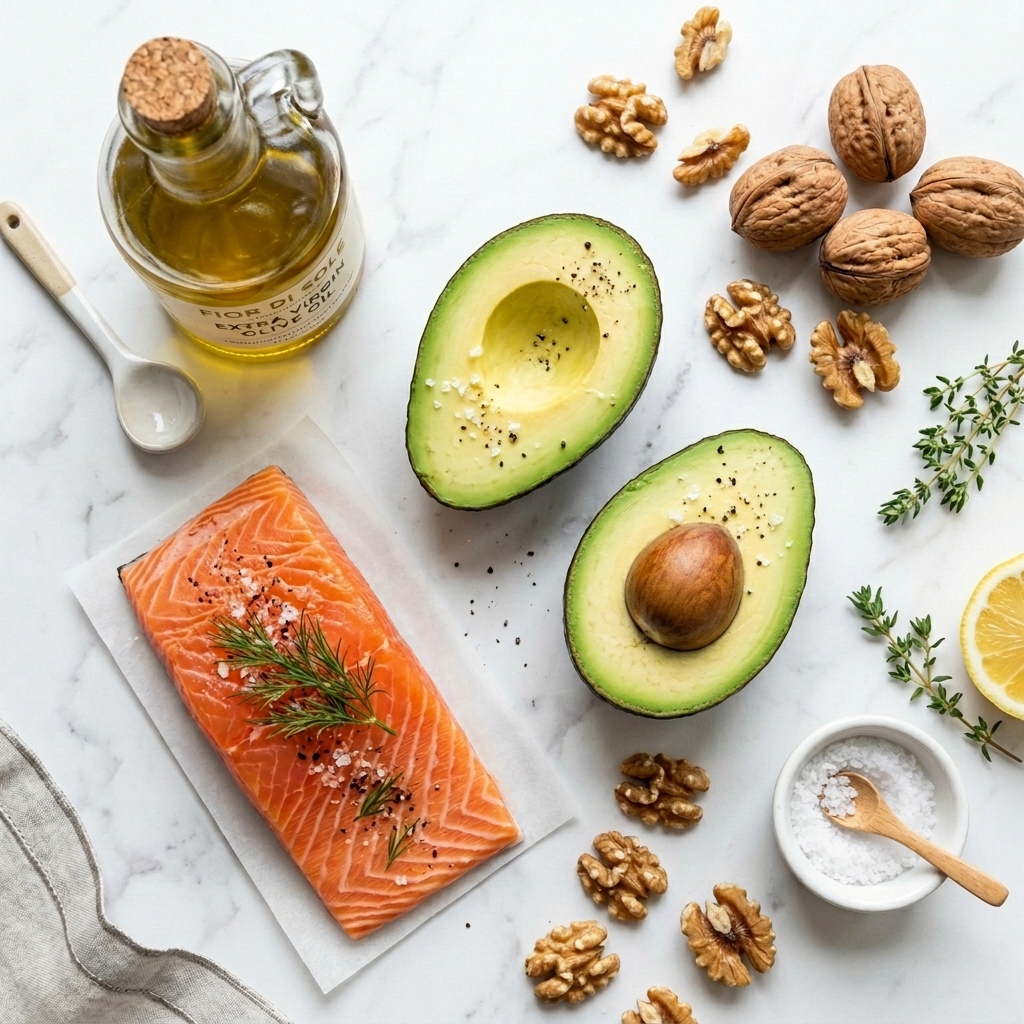
LOVE IT
The foundation of a heart-healthy diet relies on unsaturated fats. These are your body's best friends for long-term cardiovascular health.
- Lowers rates of cardiovascular disease & all-cause mortality.
- Actively lowers "bad" cholesterol & triglyceride levels.
- Provides essential fats your body needs but cannot produce itself.
Food guidance
Three lists. Eat more of the first column. Be mindful of the middle. Limit the third.
Eat freely
The base of the plate.
- Vegetables — fresh or frozen, all kinds, no added sauce. Aim for color variety.
- Fruit — whole fruit over juice. Berries, apples, pears, citrus, melon.
- Whole grains — oats, brown rice, quinoa, whole-wheat bread, popcorn (air-popped).
- Beans and lentils.
- Fish — salmon, sardines, mackerel, tuna, cod (baked, broiled, grilled). Twice a week.
- Skinless chicken or turkey.
- Nuts and seeds — about a handful a day, unsalted.
- Olive oil, canola oil, avocado oil for cooking.
- Skim or 1 % milk, plain low-fat yogurt.
- Water, sparkling water, unsweetened tea, black coffee.
Be mindful
Smaller portions, less often.
- Lean red meat — once or twice a week, palm-size portion.
- Whole eggs — about one a day if other cholesterol is low; egg whites unrestricted.
- Cheese — small amounts of part-skim mozzarella, feta, parmesan.
- Avocado, olives — heart-healthy but calorie-dense.
- 100 % fruit juice — small glass; whole fruit is better.
- Dark chocolate — a small square as a treat.
- Alcohol — less is better than more. None is also a healthy choice.
Limit
Save for occasions, or skip.
- Sugary drinks — soda, sweet tea, sports drinks, energy drinks, sweetened coffee.
- Processed and cured meats — bacon, sausage, hot dogs, deli meat.
- Fried foods — French fries, fried chicken, donuts.
- Full-fat dairy — whole milk, butter, cream, ice cream.
- Pastries, croissants, biscuits, most cookies and cakes.
- Tropical oils — coconut oil, palm oil.
- Trans fats — anything with "partially hydrogenated oil" on the label.
- Most fast-food meals.
Things worth knowing
What heart-healthy actually means
It's not a diet. It's a pattern: vegetables, fruit, whole grains, beans, fish, nuts, olive oil. The same plate works for kids and adults.
The Mediterranean plate
Half vegetables and fruit. A quarter whole grains. A quarter lean protein. A small amount of healthy fat on the side.
The four numbers on a label
When you flip a package over, look for saturated fat, sodium, added sugar, and fiber. Those four tell you most of what you need to know.
Easy swaps
Water for soda. Olive oil for butter. Salmon for steak. Brown rice for white. Most of the work is in the swaps, not the rules.
Talk to your care team if…
- Your cholesterol goes up despite eating well for 3 to 6 months.
- You're starting or stopping a medication.
- You have a family history of early heart disease and haven't had a lipid panel in over a year.
- You're pregnant or planning to be — some lipid medications need to be paused.
About this guidance
Based on the AHA's Life's Essential 8 framework (Lloyd-Jones DM et al., Circulation, 2022), the U.S. Dietary Guidelines for Americans 2020-2025, and the NHLBI Expert Panel on Integrated Guidelines for Cardiovascular Health and Risk Reduction in Children and Adolescents (2011).
General education, not medical advice. Talk with your care team.